

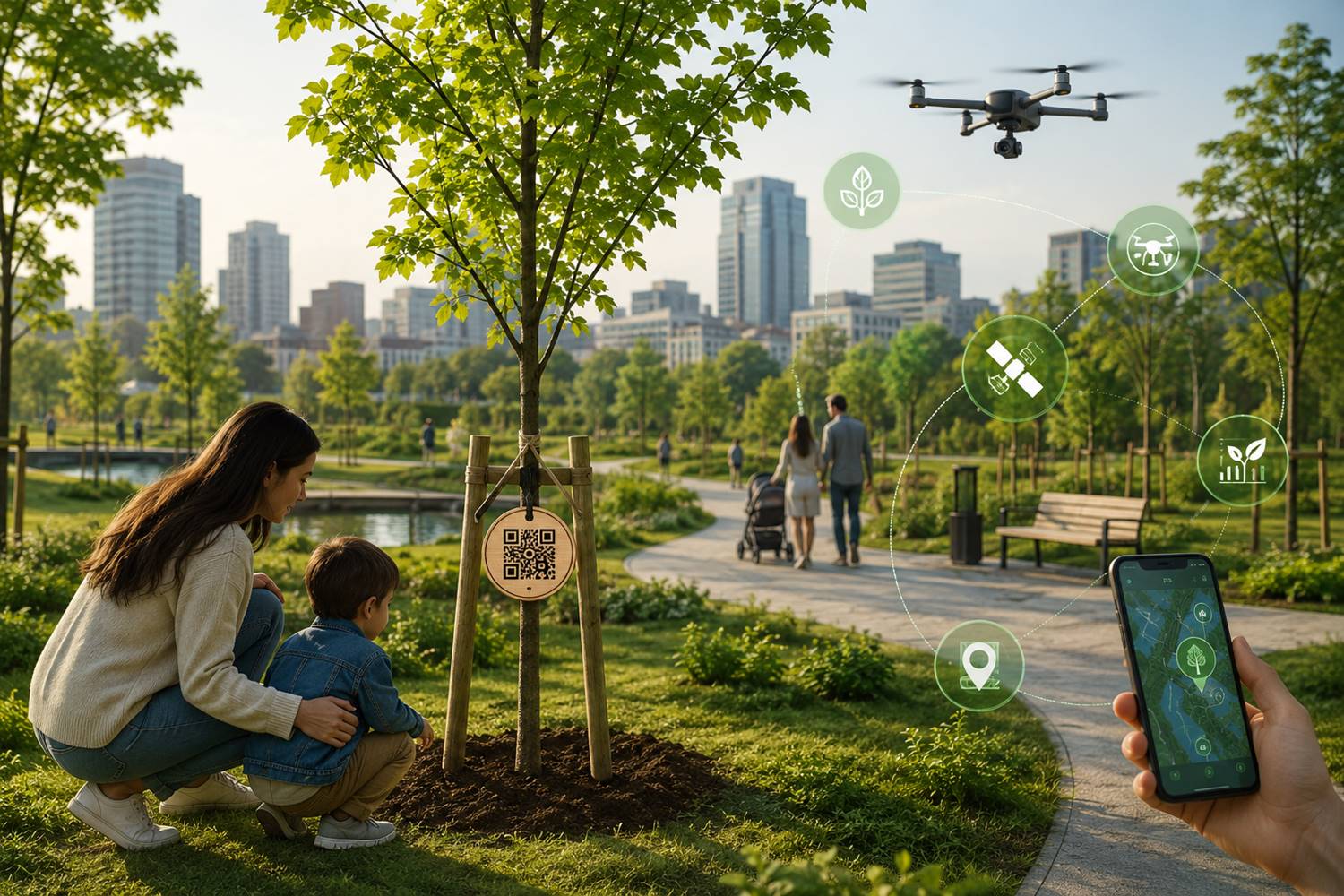
 Last year, a symbolic environmental campaign was
successfully implemented in one of the country's parks, where a personalized
"tree of life" was planted for every newborn child. A key feature of
the initiative was the integration of modern digital technologies: each tree
was assigned a QR code, allowing people to access information about the
planting, monitor its growth, and engage local residents in the maintenance of
urban green infrastructure.
Last year, a symbolic environmental campaign was
successfully implemented in one of the country's parks, where a personalized
"tree of life" was planted for every newborn child. A key feature of
the initiative was the integration of modern digital technologies: each tree
was assigned a QR code, allowing people to access information about the
planting, monitor its growth, and engage local residents in the maintenance of
urban green infrastructure.
This experience clearly demonstrates
high public interest in projects that bridge environmental protection,
digitalization, and family values. These are the exact principles driving the
development of the "Newborn Parks" concept, currently being advanced
by a group of researchers and experts in geoinformation technologies, ecology,
urban planning, and sustainable development.
The project involves creating specialized
green public spaces where every tree serves as a symbol of new life and, at the
same time, functions as part of a unified digital ecosystem. By utilizing GIS
technologies, satellite monitoring, drones, geodetic measurements, and digital
platforms, the team plans not only to select the most suitable territories for
these parks but also to ensure long-term monitoring of their condition.
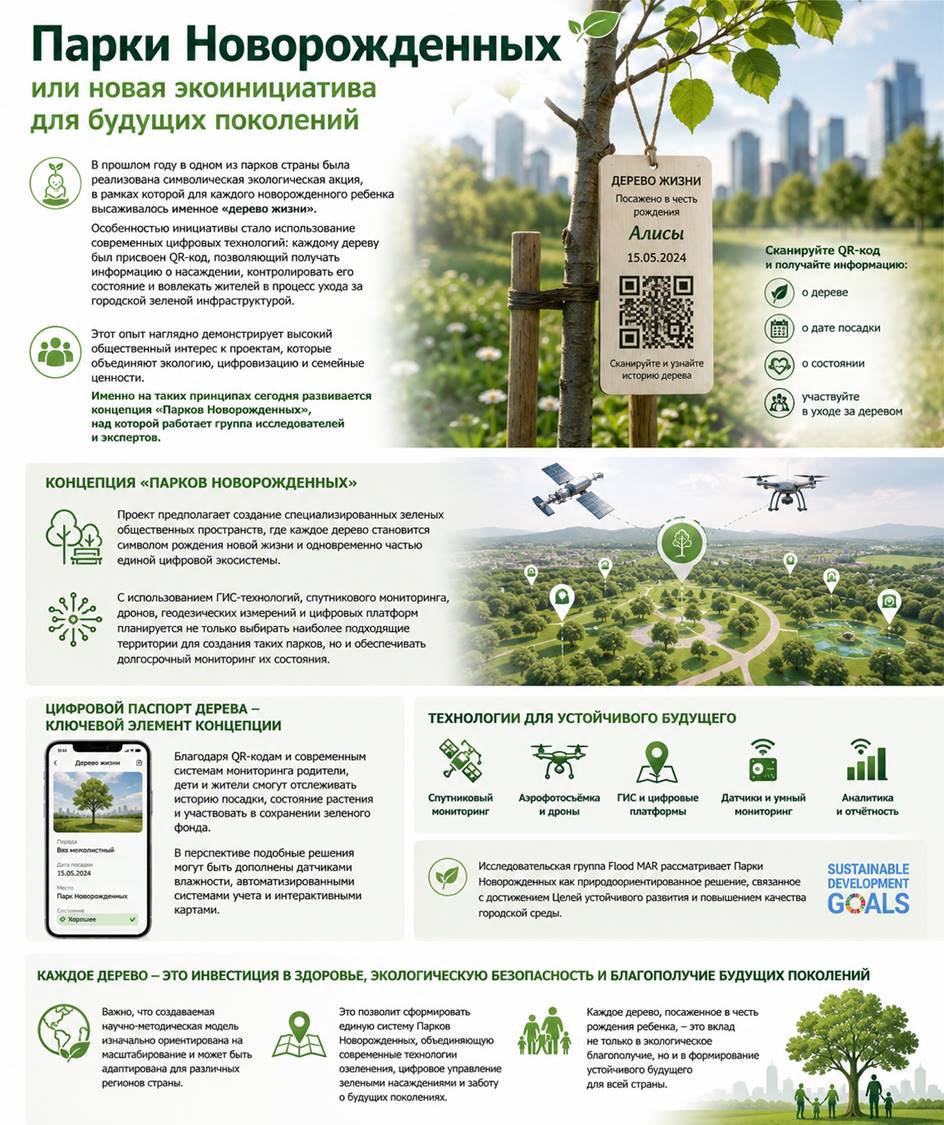 One of the central elements of the
concept is the "digital tree passport." Thanks to QR codes and modern
monitoring systems, parents, children, and residents will be able to track the
tree's planting history and health, actively participating in preserving the
urban green fund. In the future, these solutions could be enhanced with soil
moisture sensors, automated tracking systems, and interactive maps.
One of the central elements of the
concept is the "digital tree passport." Thanks to QR codes and modern
monitoring systems, parents, children, and residents will be able to track the
tree's planting history and health, actively participating in preserving the
urban green fund. In the future, these solutions could be enhanced with soil
moisture sensors, automated tracking systems, and interactive maps.
The Flood MAR research group views
Newborn Parks as a nature-based solution directly tied to achieving the
Sustainable Development Goals (SDGs) and improving the quality of the urban
environment. Moving forward, this initiative could serve as a blueprint for
scaling successful greening and environmental education practices to a national
level. Every tree planted is an investment in the health, environmental safety,
and well-being of future generations.
Importantly, the scientific and
methodological model currently being developed is inherently designed for
scalability and can be adapted to various regions across the country. This will
enable the formation of a unified Newborn Parks system that brings together
advanced greening technologies, digital urban forestry management, and care for
future generations. Each tree planted to celebrate the birth of a child is a
contribution not only to ecological well-being but also to building a
sustainable future for the entire nation.